Frankie.
A pop-noir character study about rage, rebirth, and what happens when a woman refuses to be simplified.
“It is true, we shall be monsters, cut off from all the world; but on that account we shall be more attached to one another.”
Mary Shelley, Frankenstein (1818)
The girl who was too much.
At twelve, Laura asked for a life-sized skeleton for Christmas. She gave him a name, Michael, and a hat. The grown-ups called it morbid; she wanted to know what lived behind every curtain marked “don't touch.”
She grew up hearing she felt too much, said too much, was too much. At sixteen she traded São Paulo for New York. In college, between classes on Evil, she read Frankenstein. That is where she learned the creature isn't born a monster. He becomes one, in the space between wanting and being denied.
Years later, her own career started to look like that creature: assembled by men whose vision was never hers. She almost quit. The way out was right there: academia, the corporate world. She stayed, and turned the monster into a character.
Frankie is that monster, stitched together from beats, memories and broken rules, with Suspiria and the myth of Persephone in the mix. The alter ego of every woman who has been told she is too much.
“Too much” women are evergreen monsters.One story, four cards.
The short film opens like a tarot deck. So does the EP: four tracks, a single story, read in order.
 I
Sea of Tragedy
 II
Daughter of Demeter
 III
Come Clean
 IV
GODDESS ENERGY
In the first card, Sea of Tragedy, comes the disillusion: she realizes she has been held back by people who will never see the world through her eyes. In the fully illustrated video, a woman in white is grabbed by many hands, assembled on an operating table and traded with a handshake.
In the second, Daughter of Demeter, Persephone takes a seat at the men's table, and rage stops being a flaw to become a tool. By the end, the flames are in her hands.
In the third, Come Clean, comes the reckoning: the good and the bad of it all, the love and the rage. Both are hers.
In the last one, GODDESS ENERGY, she accepts herself whole, scars included, and heads out into the night with her friends.
Two days in November.
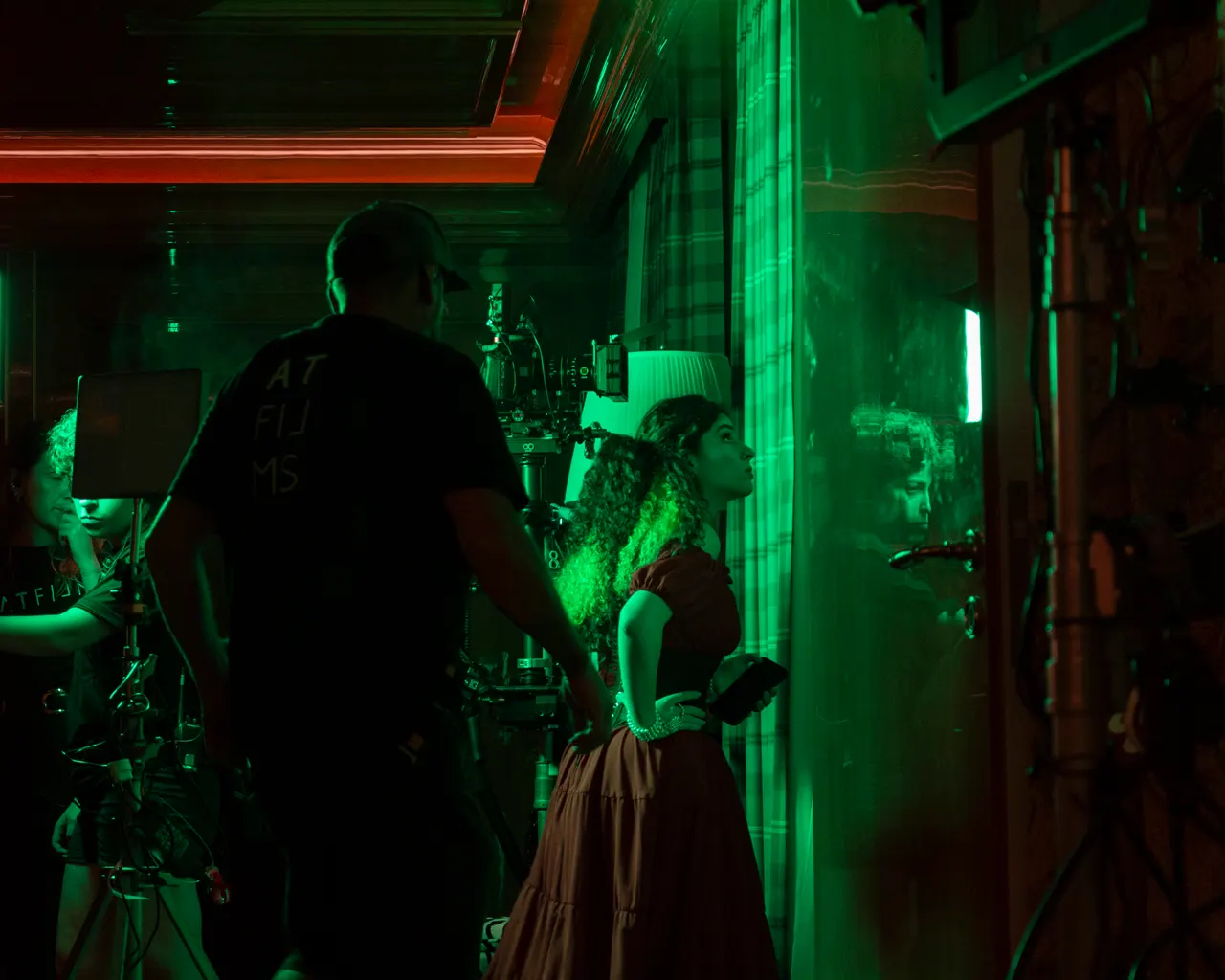
Before it was a record, Frankie lived for two whole days on a set. The behind-the-scenes photos keep the exact time of every shot, so those two days can be retold almost minute by minute.
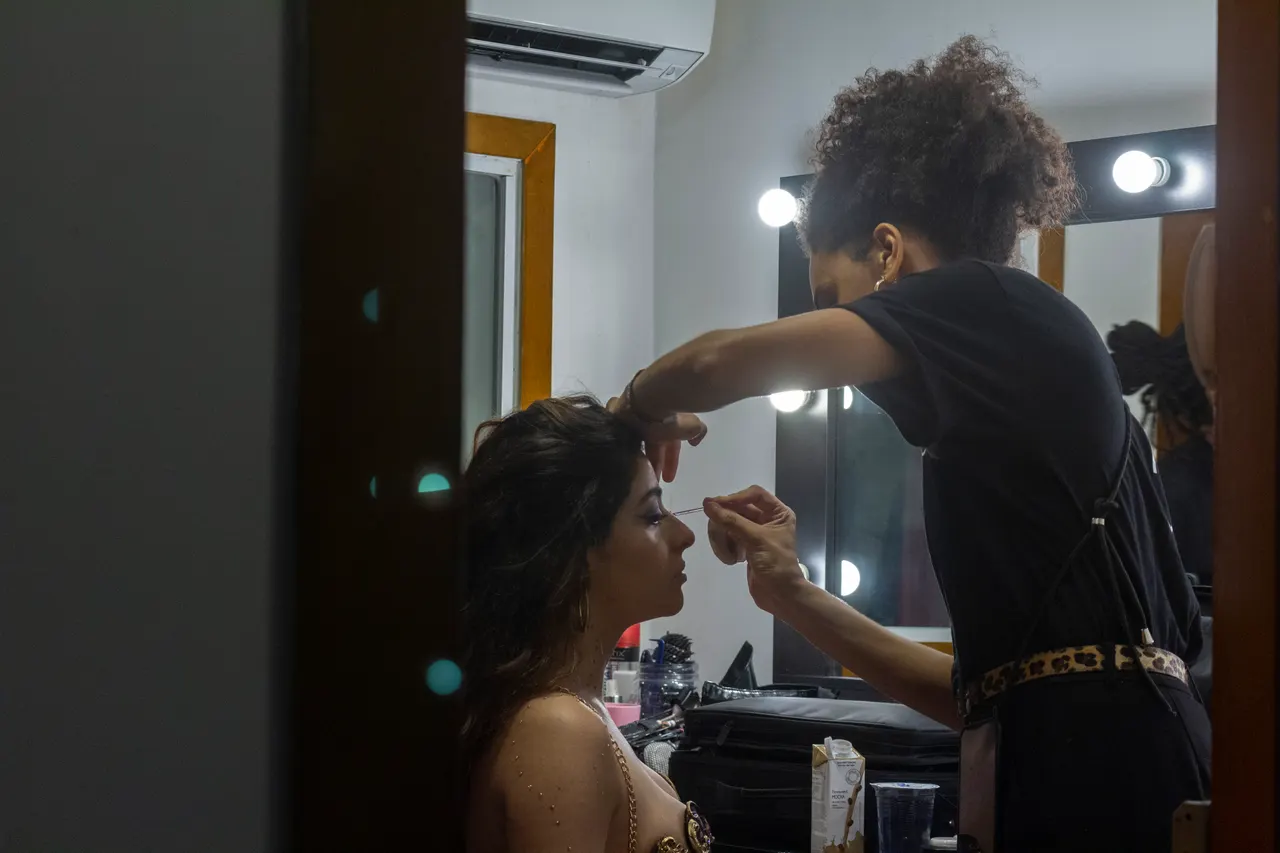
Early afternoon. In a black-walled studio, Laura sits in the makeup chair, still herself. Brushes, lashes, a mirror ringed with bulbs. Frankie begins like this: in other people's hands.
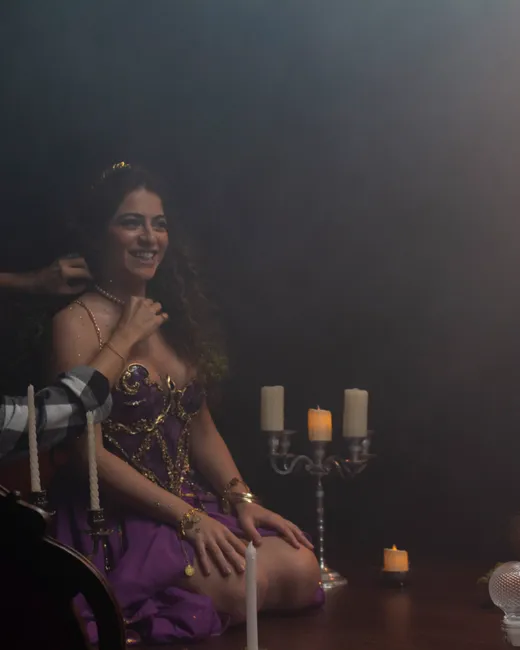
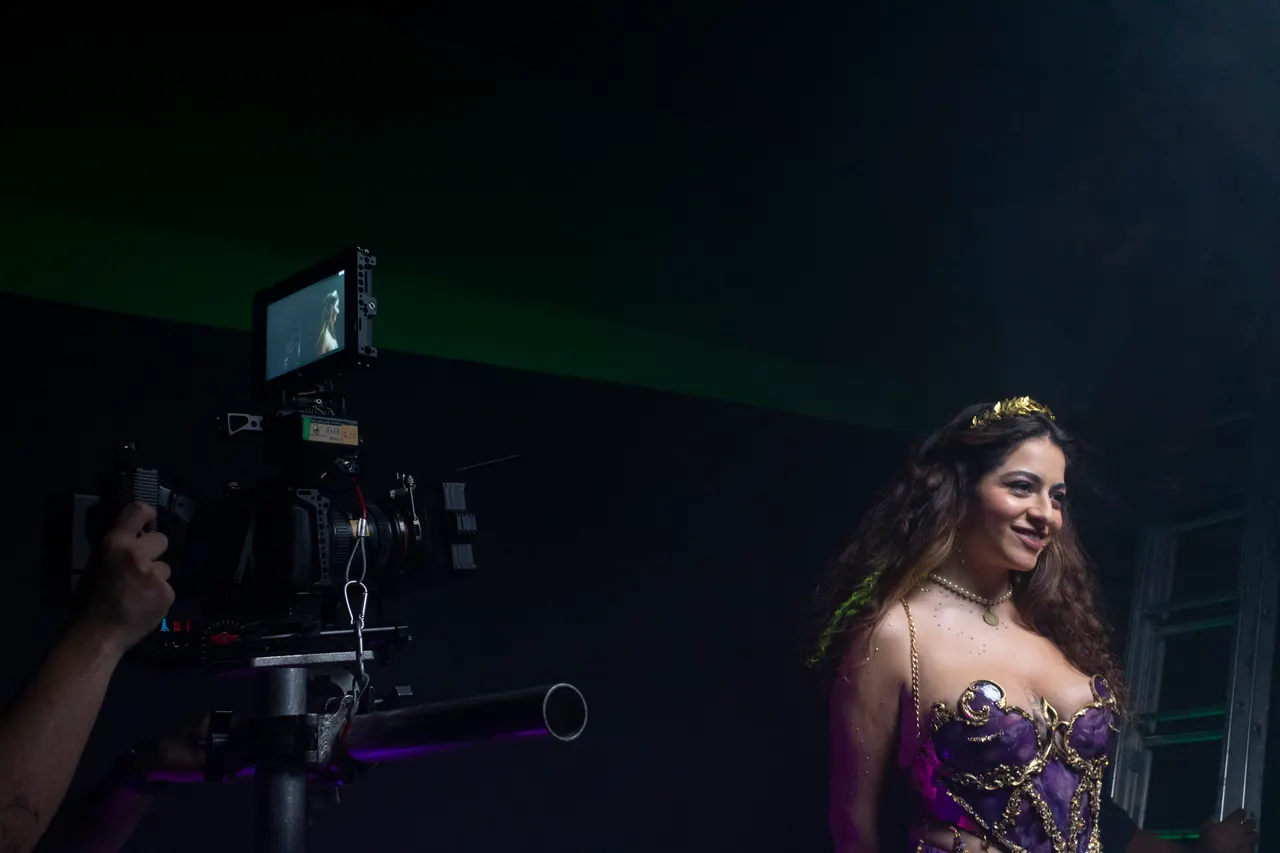
An hour later she is someone else. Purple bodice, gold filigree, a crown: dressed as the goddess of the gilded oval portrait that opens Daughter of Demeter. The camera circles her through the haze, and she laughs into the lens.
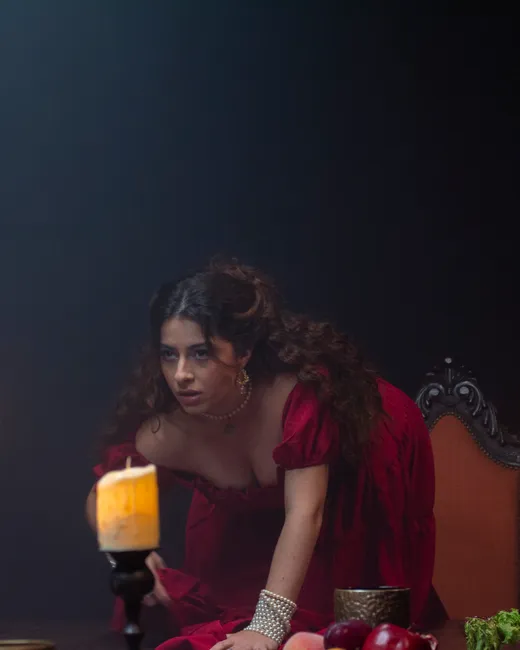
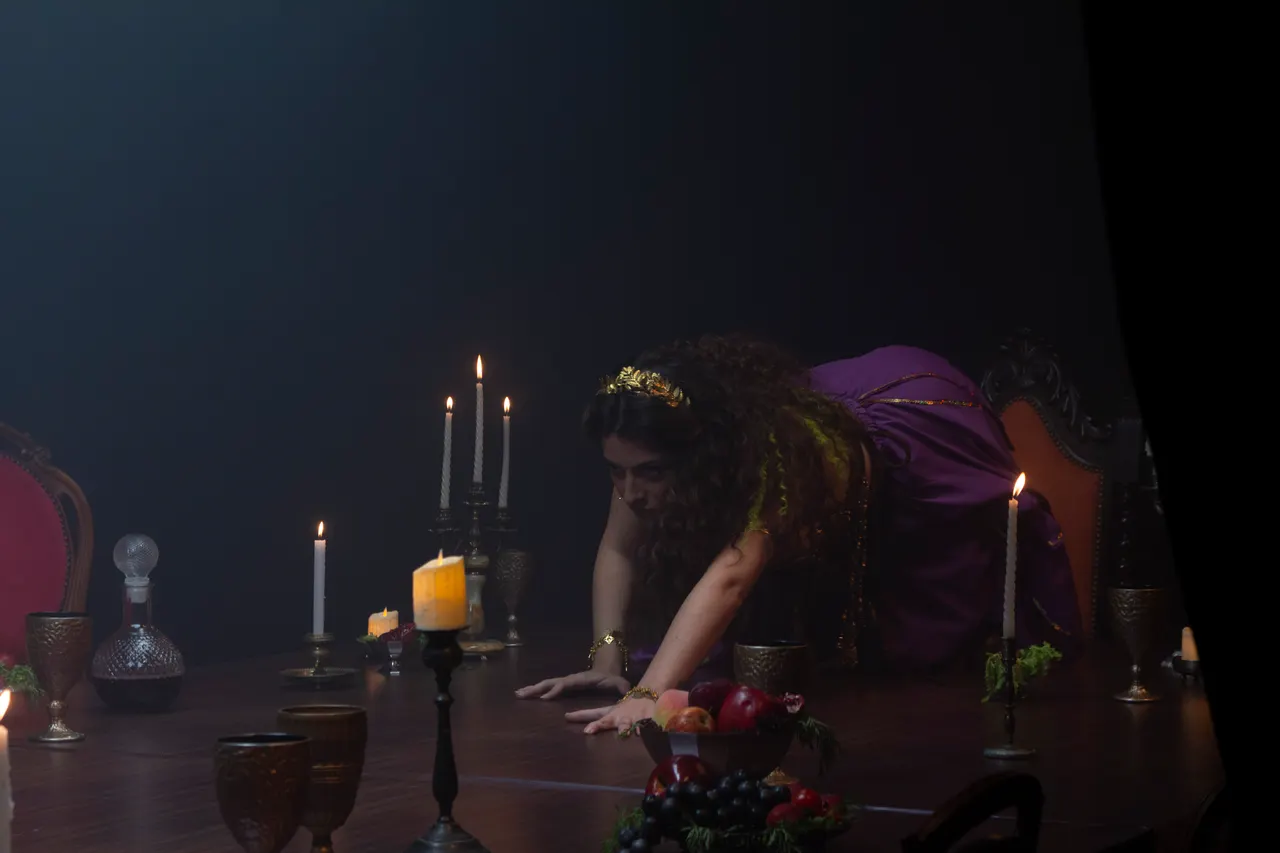
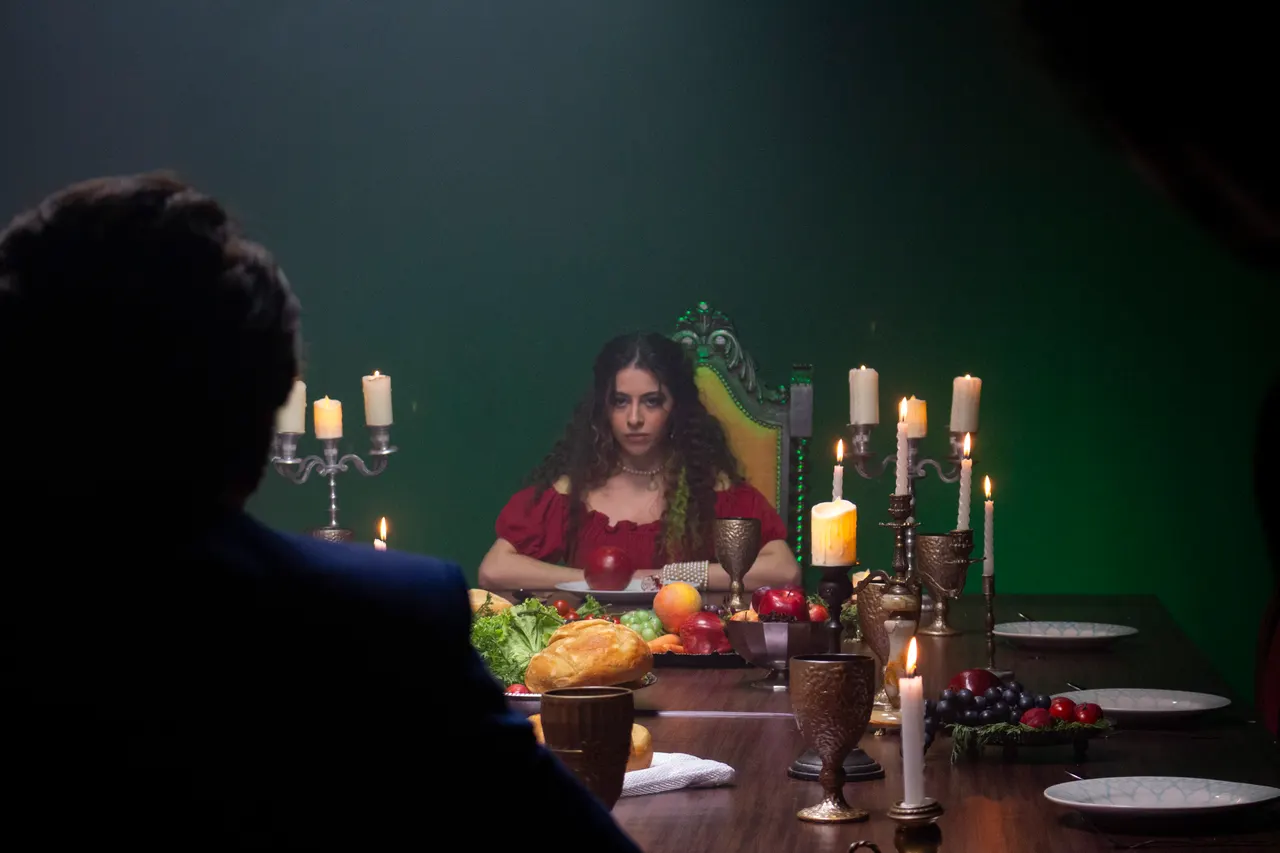
By late afternoon the banquet table is set: candles, metal goblets, grapes and pomegranates, the fruit that binds Persephone to the underworld. Laura doesn't sit. She climbs onto the table and crawls across it, between the flames.
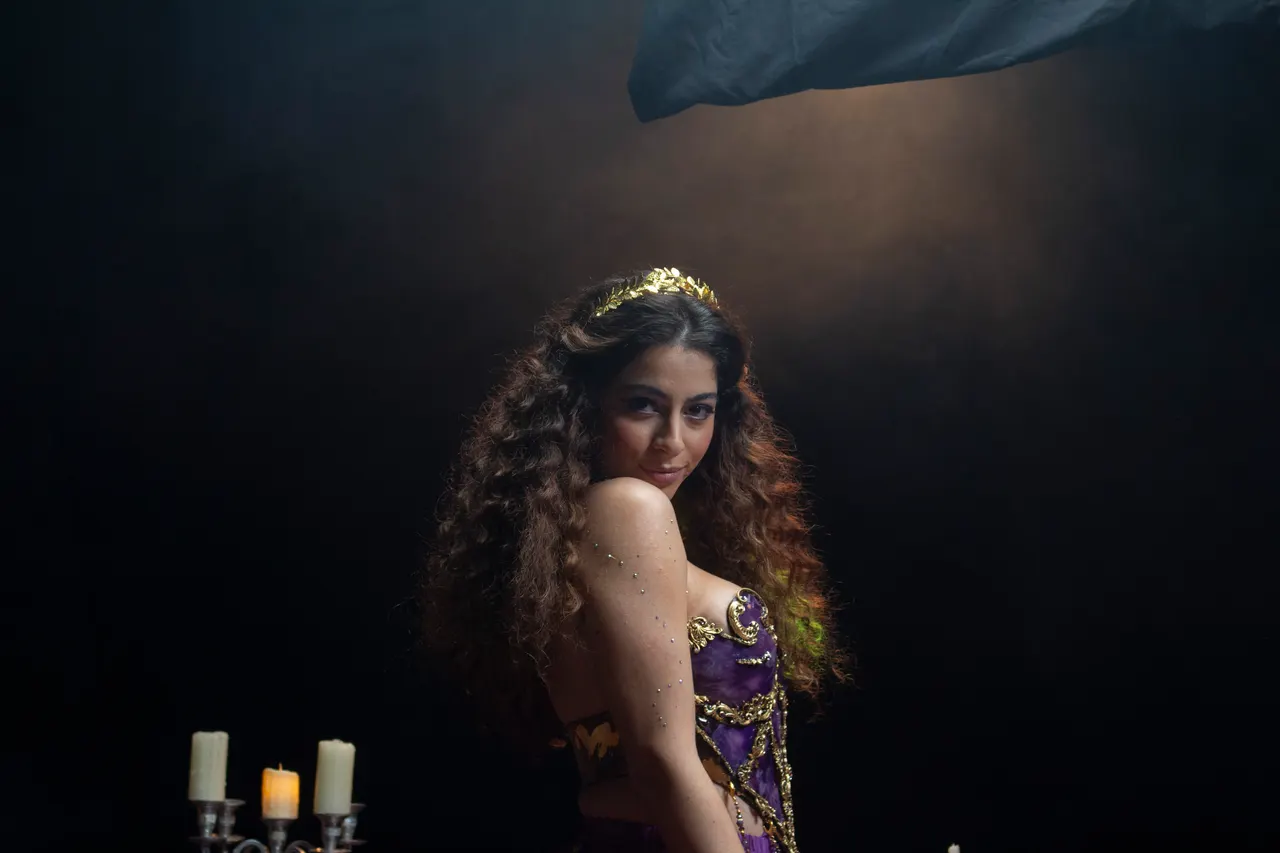
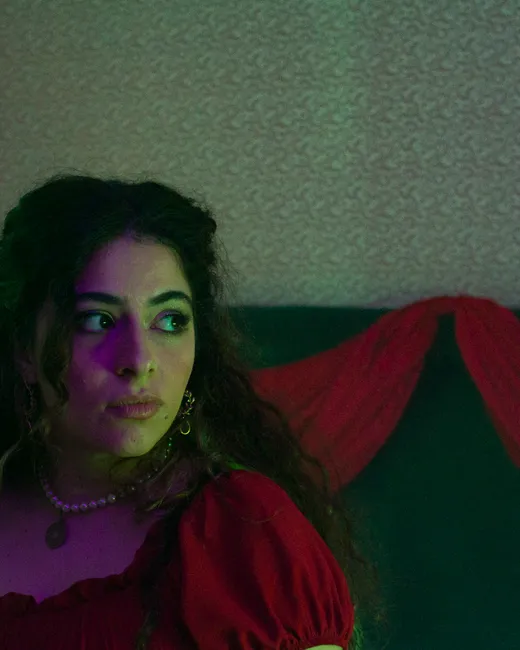
When night falls she changes skin: red dress, black corset, pearls on her wrists. Same table, another woman. At 7:08 p.m. she stands alone in a single beam of light, and the whole studio turns green.
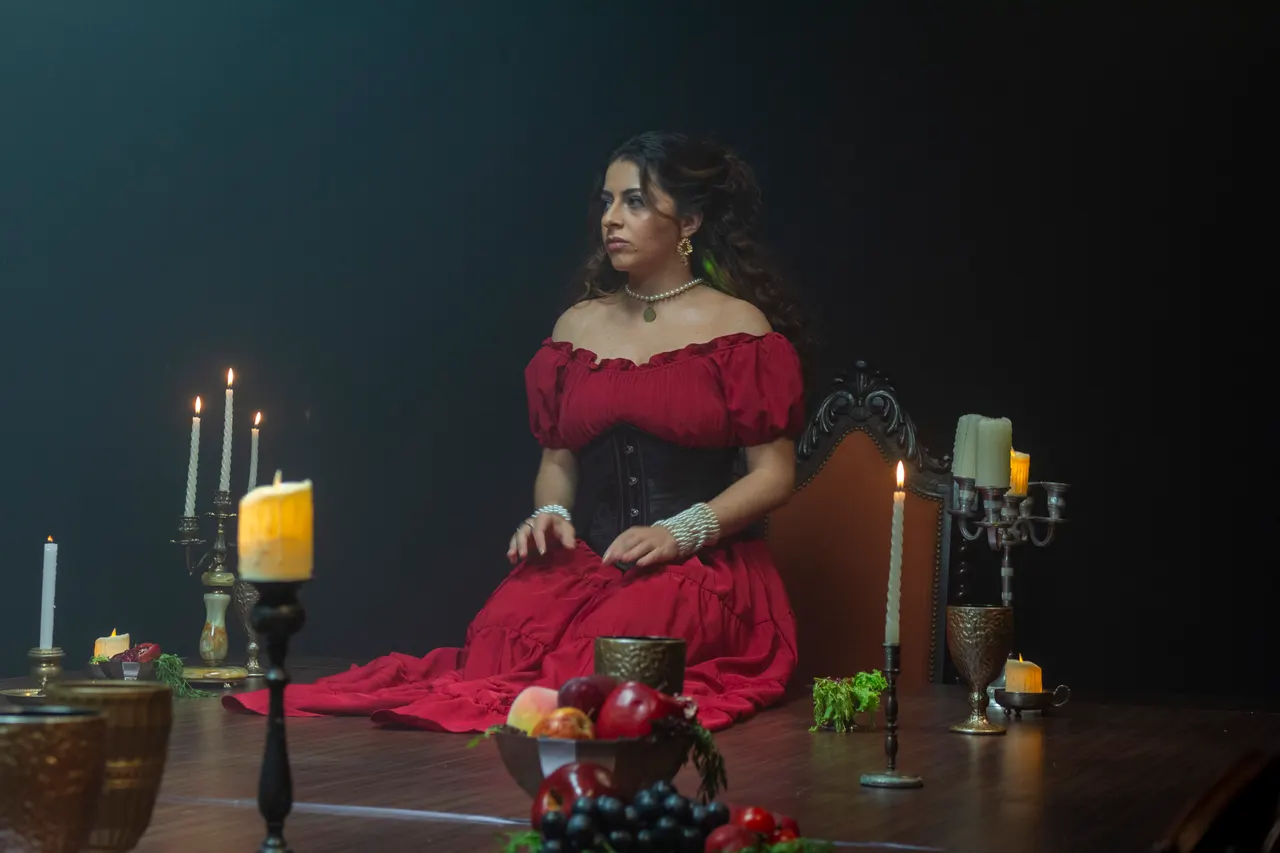
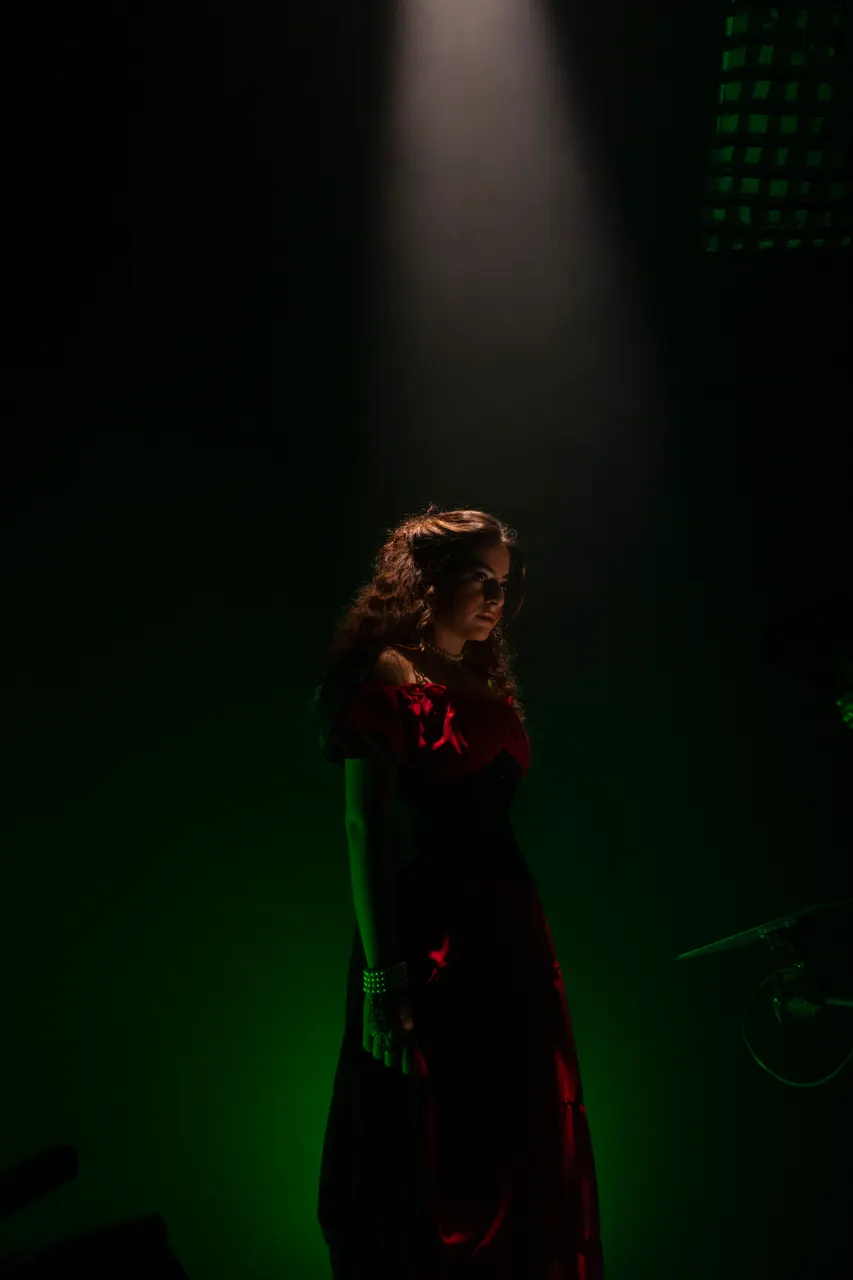
At 8:37 p.m. she takes the head of the table. Across from her sits a man in a suit, his back to us. This is the dinner of Daughter of Demeter: Persephone at the men's table, without asking permission.
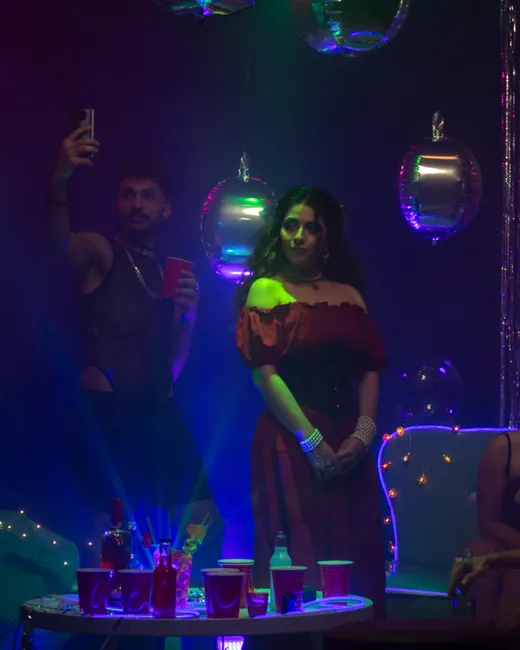
Near midnight the set becomes a party: silver balloons, tinsel, red cups, friends. Four glittering women fit into one selfie. This is GODDESS ENERGY, the last card in the deck and the first to reach the public.

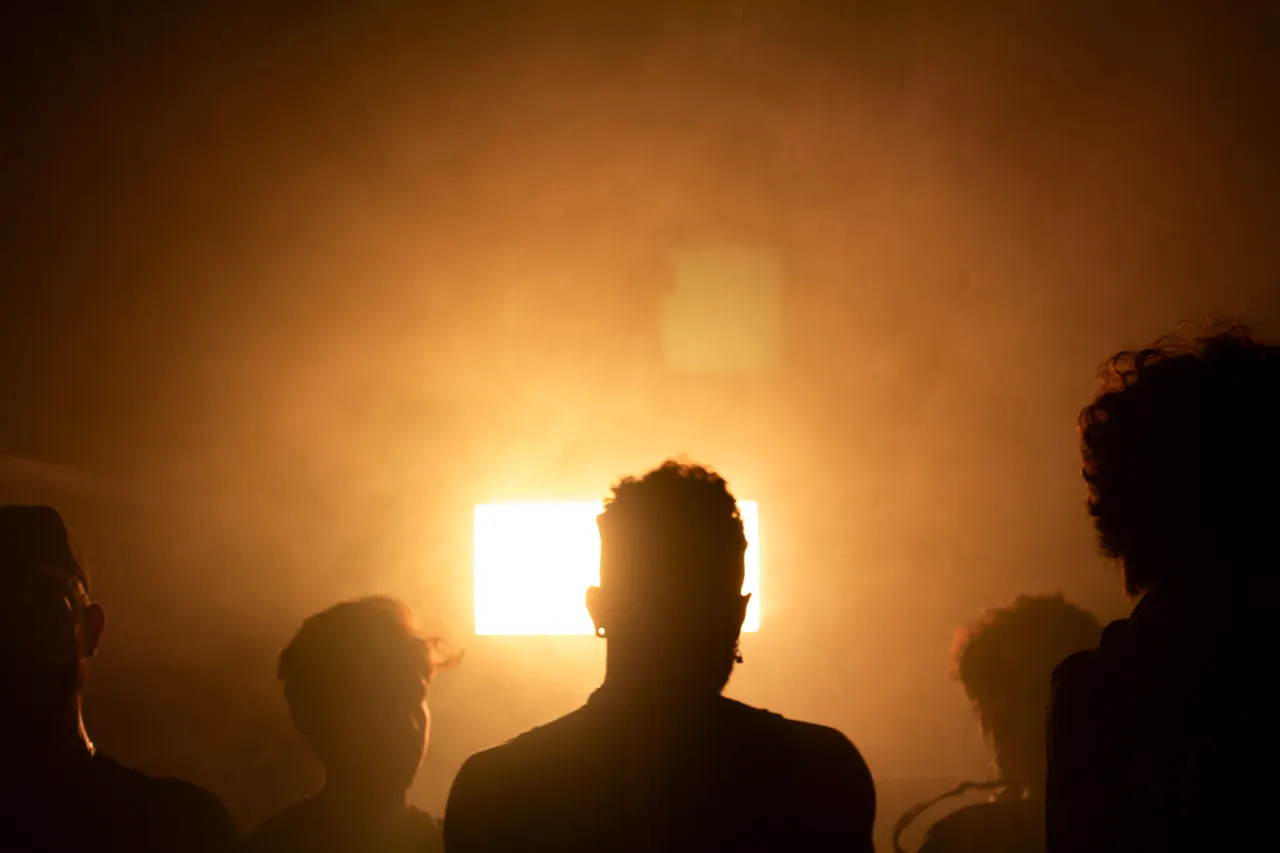
At 11:39 p.m., day one ends in silhouettes against the light.
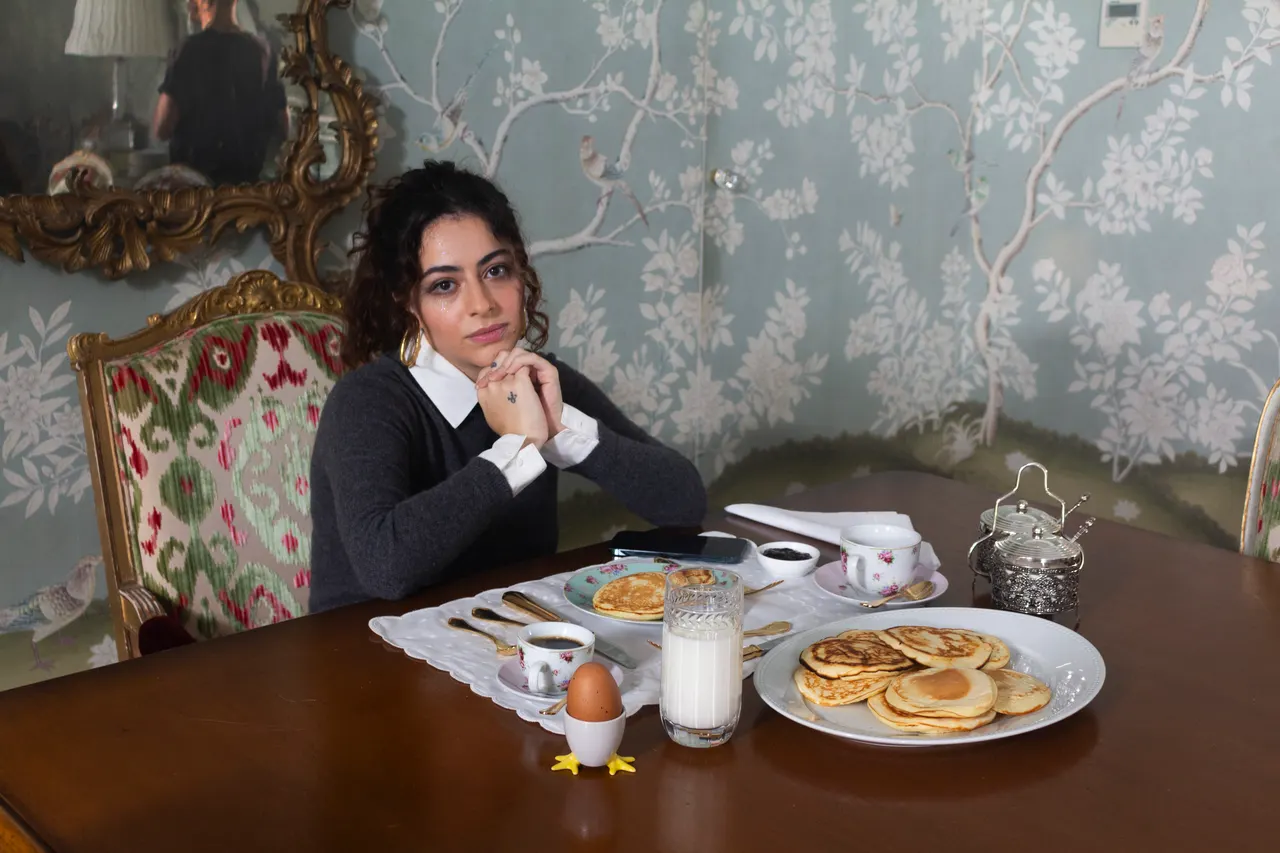
On Monday the monster disappears. In a mansion with bird-patterned wallpaper and a gilded mirror, Laura puts on a school uniform and sits down to a flawless breakfast: pancakes, milk, a soft-boiled egg. This is how the short film introduces the real Frankie, a well-behaved girl in a house where everything has its place.
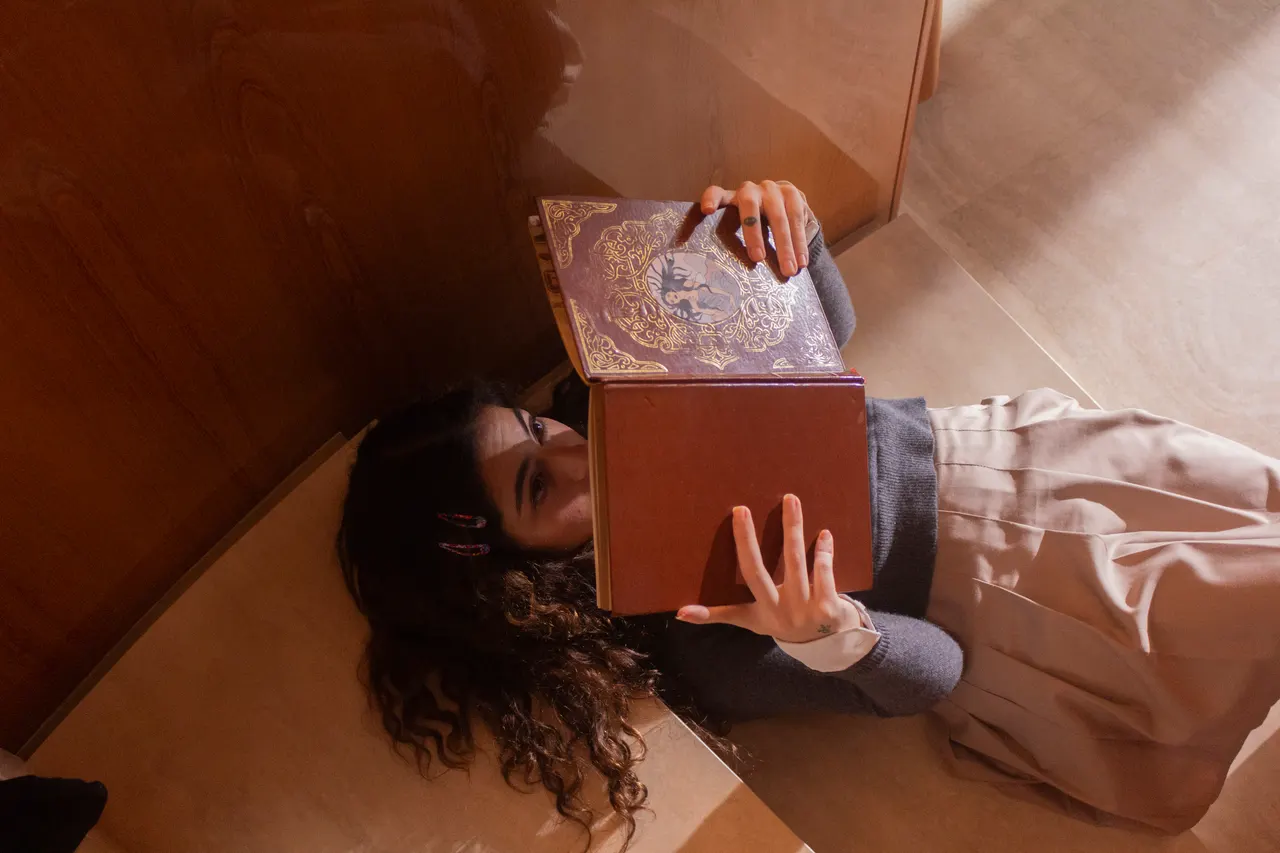
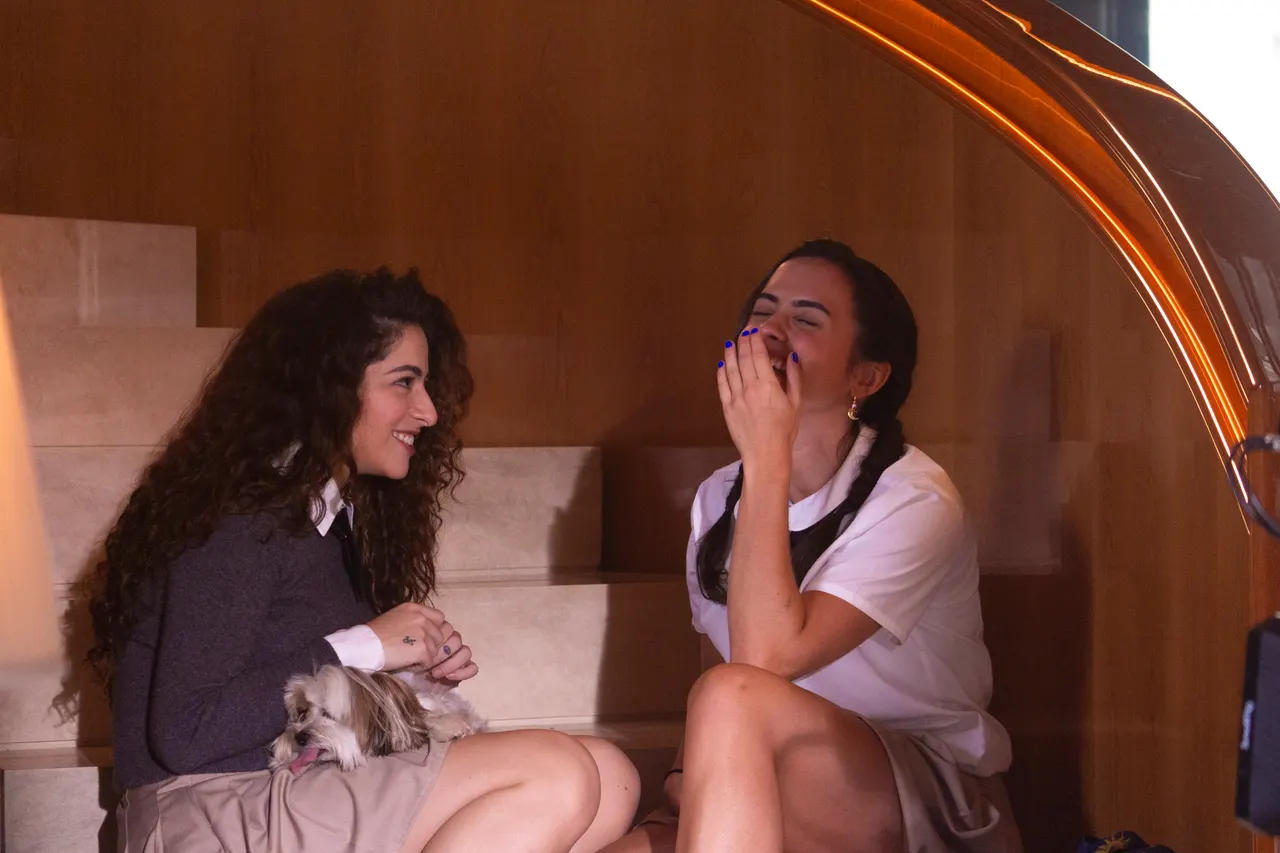
In the afternoon she sprawls on the marble stairs with an old gilded book. Her friend in braids shows up, there is a little dog, and the scene dissolves into a fit of laughter.
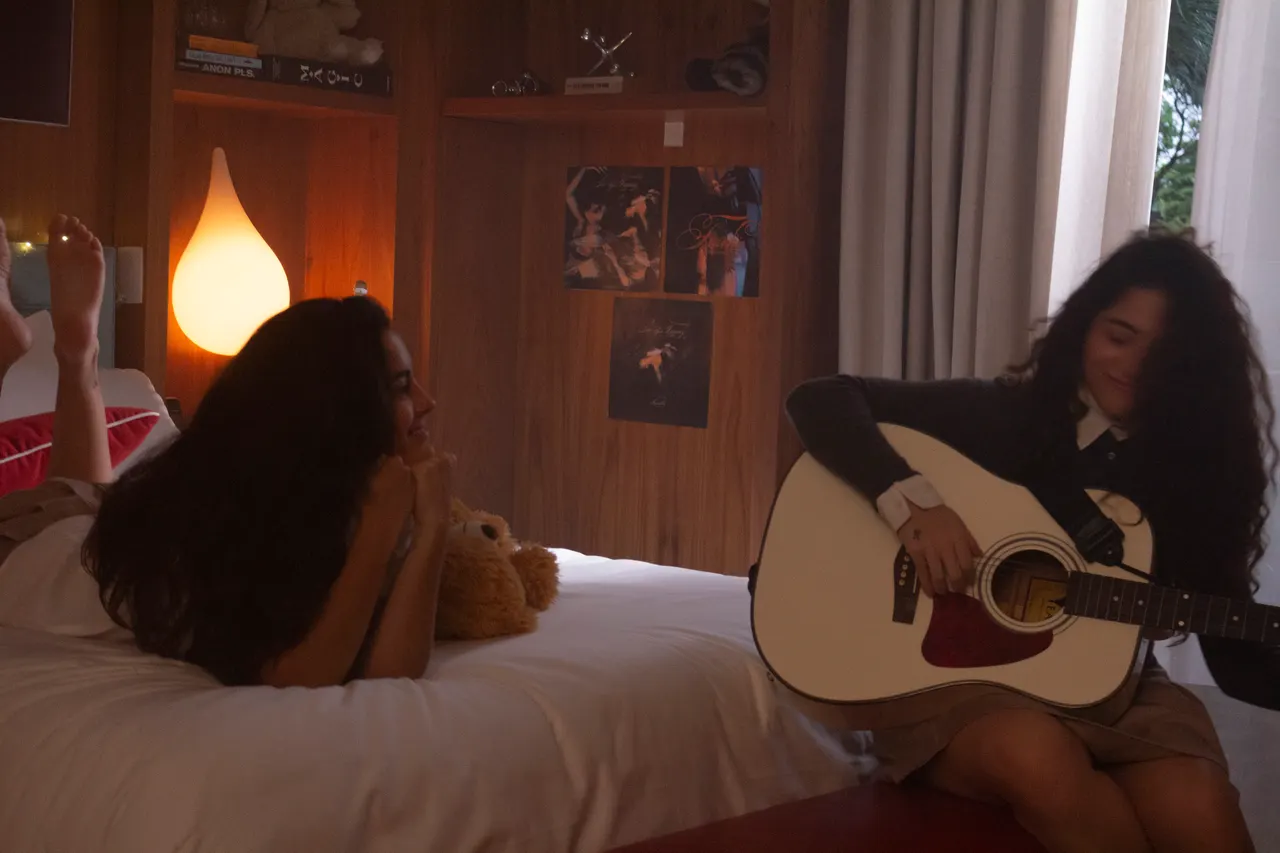
At night, in a bedroom of fairy lights, a teddy bear and posters on the wall, she writes in a notebook and plays guitar. The girl who writes songs.
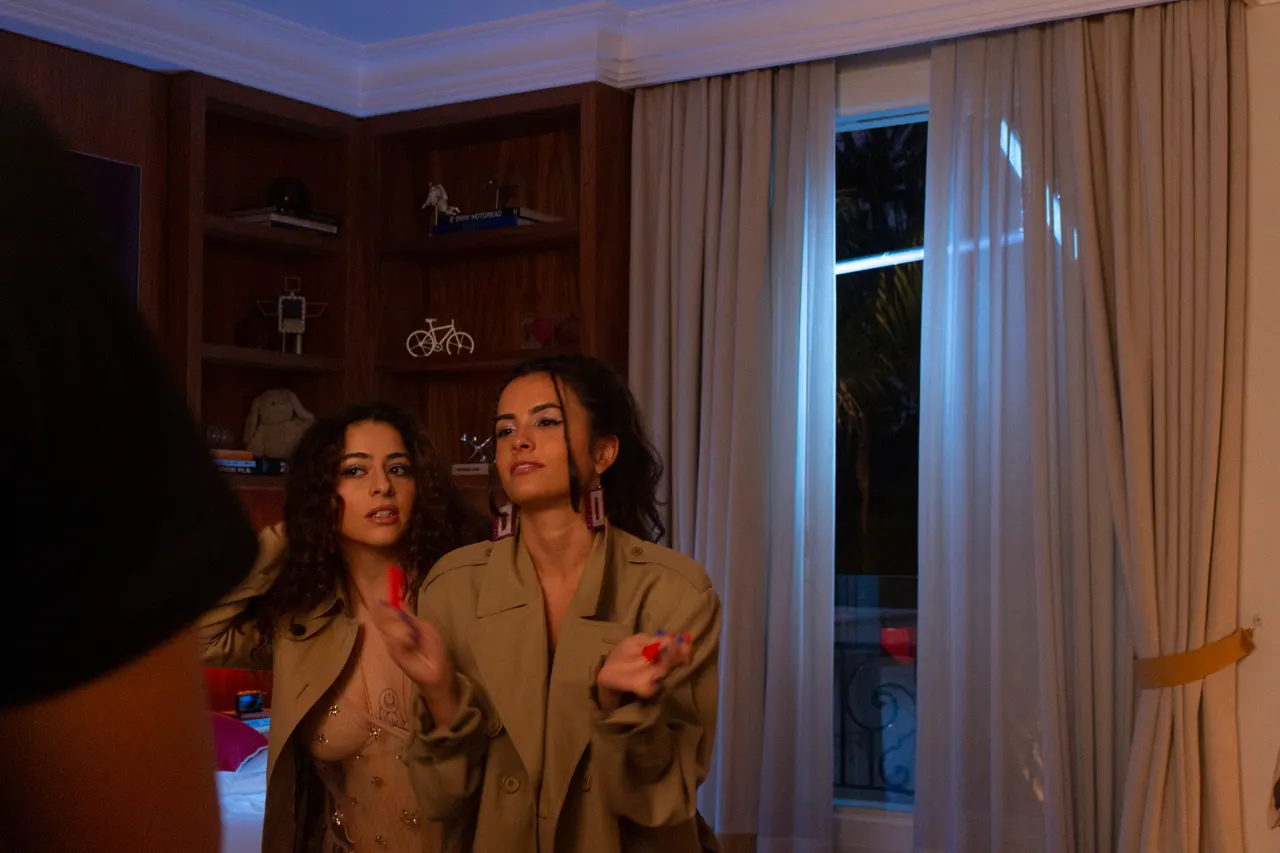
At 8:10 p.m. the trench coat goes on over the party clothes. She is going to sneak out. In the short film she does: the night ends dancing across the city with her friends.
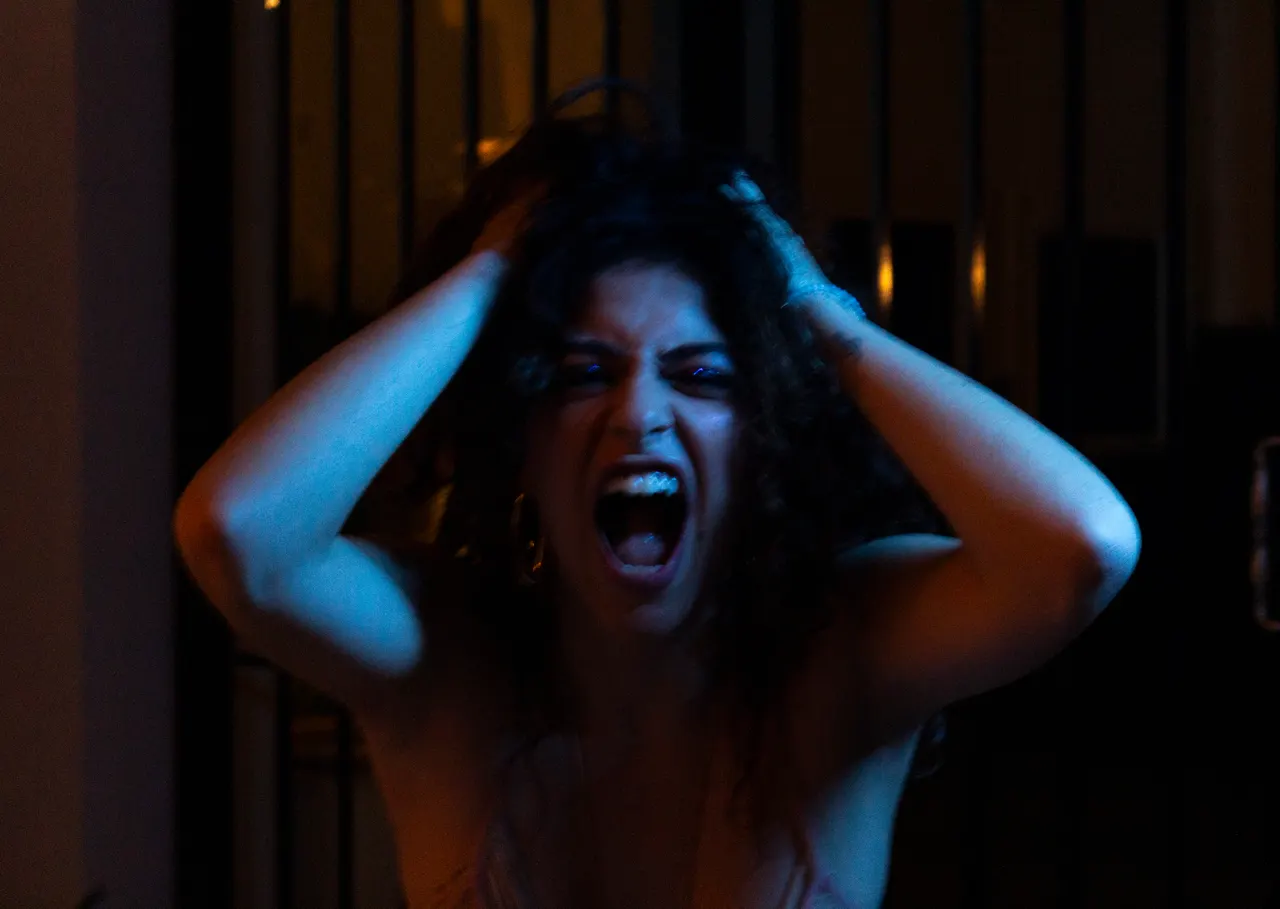
Forty-two minutes later, the scream. Hands in her hair, mouth open, blue light. Everything the well-behaved girl swallows all day comes out at once.
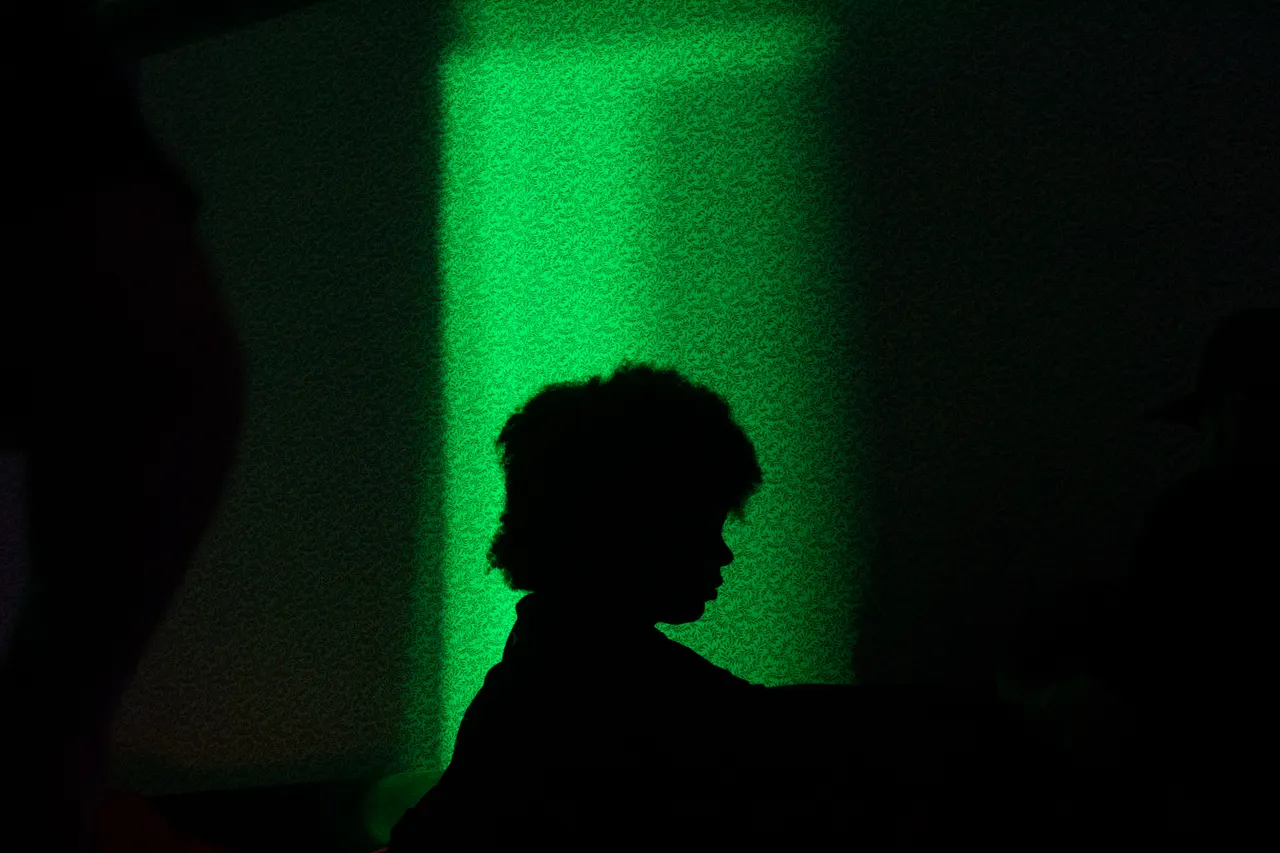
Then only her shadow against the green.
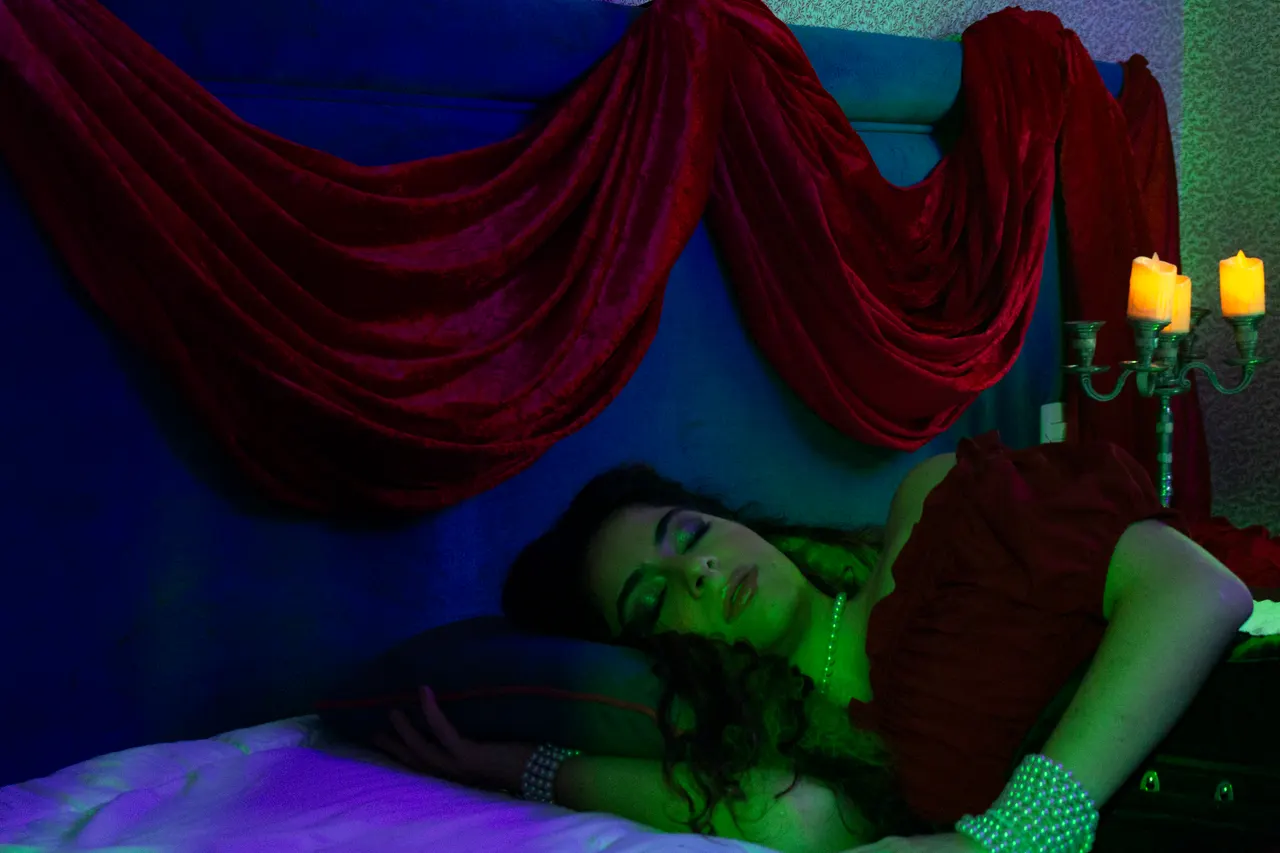
And the red dress returns, between velvet drapes and candles. The girl from the mansion and the woman at the banquet are the same. The short film spends its whole length stitching one into the other.
At 11:47 p.m., the last shot. In 2024, the world met Frankie.
Who made Frankie.
Laura wrote the story and led the creative direction of the whole project, from styling to image, over two years. On the film, women headed direction, executive production, production design, wardrobe and makeup; on the EP, Skyler Cocco was executive producer. In 2025, the animated Sea of Tragedy video won a Silver Telly Award.
- Story
- Laura Pieri
- Director
- Maíra Sarmento
- Executive producer & animation director
- Gabriela Leal
- Cinematography
- Alex Tavares
- Animation
- Ricardo La Bella
- Illustration & storyboard
- Fellipe Gonzalez
- Production design
- Amanda da Mota
- Wardrobe
- Camila Chiondini
- Hair & makeup
- Elis de Sousa
- Music
- Skyler Cocco, YXSH
- Lyrics
- Skyler Cocco, Laura Pieri
- Production
- Cake Studio & AT Films
Frankie went dancing.
Frankie didn't end with a happy ending. She ended on a dancefloor. In 2025 the tracks came back remixed, one by one, next to the new Flown Away, until they became Frankie (ON THE DANCEFLOOR).
In September, Laura opened “Frankie’s closet” and announced the final season. On the 19th the character left the stage, and a new era began.
What stayed in the closet became a collection made with ONE432: fabric that would have been waste, embroidered by hand, with half of the profits going to children's education and to the artisans. Beauty in what was broken, which is what Frankie was about from the start.
See the collectionFrankie’s always been my monster.